

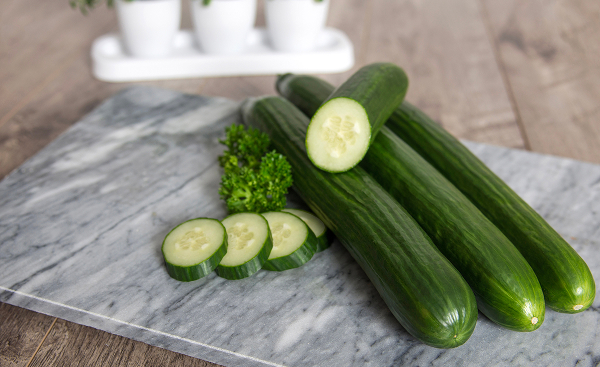
For produce buyers and retail category managers, stocking the right mix of greenhouse vegetables is essential to driving basket size and reducing shrink. Cucumbers remain a staple in the produce section, but consumer preferences have shifted significantly toward smaller, convenient, snackable varieties.
Comparing mini cucumbers vs regular cucumbers highlights clear differences in nutritional density, consumer applications, product shelf life, and merchandising potential. Understanding these distinctions helps retailers curate the optimal mix of greenhouse produce that appeals to modern shoppers.
Understanding the Key Differences
While both varieties belong to the same plant family, cultivation methods and target consumer uses set them apart in the produce department.
Regular Cucumbers
Standard field cucumbers (and long English cucumbers) are prized for their high water content and traditional slicing applications. Long English varieties are greenhouse grown and wrapped in thin plastic to protect their delicate skin. They offer a mild, refreshing taste but require slicing, prep work, and immediate consumption once cut.
Mini Cucumbers
Mini cucumbers (often called Persian or cocktail cucumbers) are thin-skinned, virtually seedless, and grown in controlled greenhouse environments like those at Del Fresco Pure. Measuring 4 to 6 inches long, they offer a firm texture and an extra crisp crunch. Because they require no peeling or seed removal, they have become a dominant choice for snacking and quick meal prep.
Nutritional Comparison: Mini Cucumbers vs Regular Cucumbers
Both cucumber varieties offer exceptional hydration and low calorie density, making them attractive to health-conscious shoppers. However, mini cucumbers offer subtle nutritional advantages because of their higher skin-to-flesh ratio.
- Skin and Fiber Content: The thin, edible skin of mini cucumbers contains concentrated levels of insoluble fiber, beta-carotene, and essential antioxidants. Since shoppers rarely peel mini cucumbers, they retain more nutrients per serving compared to field cucumbers, which are often peeled to remove bitter skin or wax coatings.
- Vitamins and Minerals: Both varieties provide key nutrients, including Vitamin K for bone health, Vitamin C, potassium, and magnesium.
- Caloric Value: Both options contain roughly 15 to 18 calories per 100 grams, making them ideal for weight management and low calorie snacking.
For recipe ideas and culinary inspiration highlighting greenhouse-grown produce, explore Del Fresco Pure recipes.
Culinary Uses and Consumer Appeal
The rise of mini cucumbers in grocery carts is driven largely by changing consumer lifestyle habits.
Convenience and On-the-Go Snacking
Mini cucumbers serve as a ready-to-eat fresh snack. Parents prefer them for school lunchboxes, work snacks, and quick dips because they require no knives, cutting boards, or prep time.
Culinary Versatility
- Salads and Pickling: Their low water ratio and firm texture keep salads crisp longer without adding excess liquid. They are also the top choice for quick home pickling.
- Charcuterie and Entertaining: Sliced or served whole, mini cucumbers add vibrant green colour and crunch to appetizer platters, hummus dips, and party boards.
- Hydration Drinks and Cocktails: Sliced mini cucumbers provide a clean, crisp infusion for waters and specialty beverages.
Shelf Life and Handling in Retail Environments
Produce shrink is one of the largest profit drains in fresh retail. Comparing shelf life and storage needs between these varieties demonstrates clear operational differences.
- Regular English Cucumbers: Wrapped in protective film, long English cucumbers typically maintain freshness for 7 to 10 days under proper refrigeration. Once cut, their cut end dries out quickly, encouraging rapid quality loss.
- Mini Cucumbers: Packaged in top seal trays or clear clamshells, mini cucumbers offer an extended retail shelf life of 10 to 14 days when stored between 10°C and 12°C (50°F to 54°F). The protective packaging maintains relative humidity, prevents bruising, and reduces handling damage on store shelves.
Avoiding direct contact with cold misting equipment prevents chilling injury, pitted skin, and soft spots in both varieties.
Merchandising Strategies to Maximize Cucumber Sales
Retailers can capture higher margins by positioning mini cucumbers as a high-value, grab-and-go specialty item alongside traditional slicers.
1. Leverage Multi Pack Clamshells and Top Seal Packaging
Clear packaging showcases the product’s freshness, vivid green colour, and uniform sizing. Grouping mini cucumbers in convenient multi-count packs increases unit value while helping protect product quality and integrity.
2. Cross Merchandise for Snacking Solutions
Place mini cucumbers near fresh dips, hummus, single serve cheeses, and prepared salad kits in the deli and produce perimeter. Positioning them as a healthy lunchbox alternative encourages impulse purchases.
3. Highlight Greenhouse Sustainability
Today’s consumers favor clean, local, sustainable growing methods. Use shelf signage to highlight year-round greenhouse consistency, water recycling systems, and pesticide-free Integrated Pest Management (IPM) practices.
Elevate Your Fresh Produce Section
Stocking both mini cucumbers and traditional cucumber varieties ensures retailers meet diverse shopper needs, from budget-conscious meal prep to high-margin snack convenience. Partnering with a reliable greenhouse grower guarantees consistent supply, uniform appearance, and exceptional crispness year-round.
Ready to optimize your produce department with high demand greenhouse varieties? Learn more about custom retail solutions and supply programs at Del Fresco Pure Retailer Solutions.