How to Choose a Produce Supplier for Your Business


If you are evaluating produce suppliers right now, you already know the basics matter. Quality and price are where every buyer starts. But the supplier that checks every box on a quote sheet is not always the one that performs six months into the relationship. The difference shows up in details most buyers do not think to evaluate until something goes wrong.
This is where supplier decisions get made or regretted. Most buyers choose based on samples and pricing. The suppliers who perform long-term are the ones whose growing methods, supply chain structure, certifications, and disruption plans hold up under pressure.
You have probably compared a few suppliers already. Maybe you requested samples, reviewed pricing, and they all looked close enough. That is the problem. When every supplier sounds the same on paper, the decision feels like a coin flip. So you default to the lowest price and hope it works.
The thing that separates a supplier who performs from one who does not is how much of the process they actually control. A supplier who grows and ships through a single integrated operation has fewer places where quality can break down. A supplier who outsources two of those steps has introduced risk at every handoff.
That is what this guide helps you evaluate. By the time you finish reading, you will know which factors predict long-term reliability and what to look for before you commit.
Every supplier shows you their best product on sample day. What you need to know is whether that product arrives at the same standard week after week, across seasons.
A supplier growing in open fields is working with variables they cannot fully manage. Weather and pest pressure shift every season, and so does the product. A greenhouse grower using hydroponic methods can regulate temperature, humidity, light, and nutrient delivery year-round. That control is the mechanism that makes consistency repeatable instead of seasonal.
When you evaluate product quality, ask how they grow. The method tells you more than the sample.
When your supplier cannot deliver for two or three months of the year, you are forced to find a backup. That backup has different quality standards and different packaging. Your customer notices even if your team does not.
Year-round greenhouse production eliminates that gap. One supplier, one quality standard, twelve months. Greenhouse-grown produce also typically has a longer shelf life than field-grown alternatives, which means lower shrink on your end and stronger margins over time.
If a supplier cannot tell you exactly how they maintain supply during off-seasons, that gap will become your problem to solve.
The best product does not matter if the supply chain breaks it before it reaches your shelf. Some companies grow the product but outsource packing or cold chain management to third parties. Every handoff is a place where temperature control can lapse or handling can cause damage.
A supplier that grows and ships under one operation controls the cold chain from the greenhouse to your dock. That integrated model produces fewer surprises because there are fewer places for things to go wrong.
Ask how many companies are involved between the harvest and your receiving door. If the answer is more than one, ask why.
Sustainability and food safety claims are easy to make. The question is whether those claims are backed by third-party audits or exist only in marketing copy.
EFI (Equitable Food Initiative) certification, for example, covers labor practices and food safety alongside environmental stewardship. It is audited externally and renewed on a regular cycle. That is documentation you can confirm independently and present to your own compliance team.
If your organization has ESG targets or responsible sourcing commitments, your supplier’s certifications are what you need to prove compliance internally. Ask for the documentation before you sign.
Every supplier relationship will face a disruption at some point. Maybe a shipment arrives late or a load comes in below standard.
Ask the supplier to describe a recent disruption and walk you through how they handled it. Ask whether they have backup growing capacity. You should also know who your point of contact is when something needs resolution early on a Monday morning.
A supplier with dedicated account management and a track record of proactive communication will protect your margins over the life of the relationship in ways that a slightly lower unit price cannot.
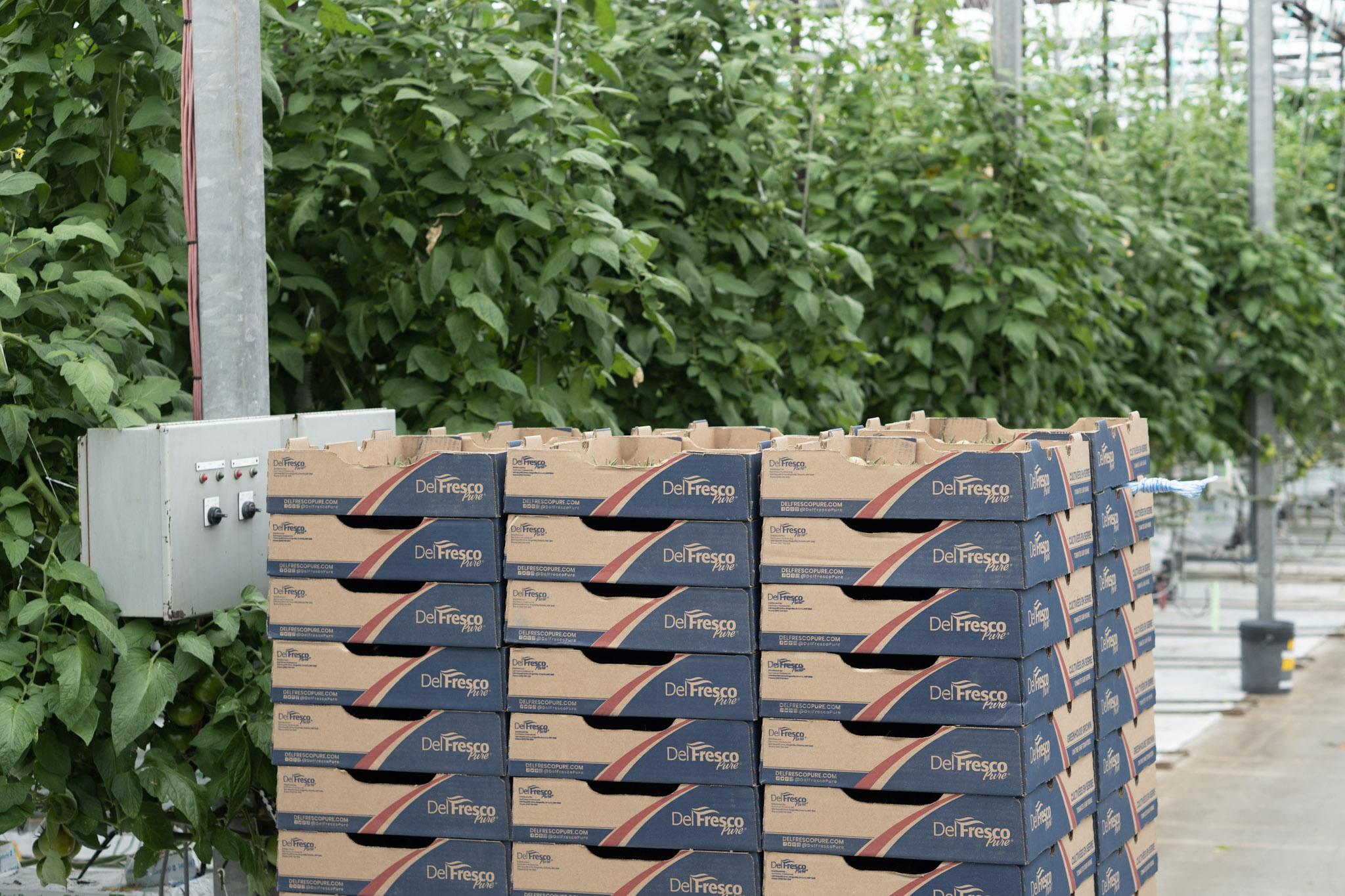
Del Fresco Pure is a family-owned greenhouse grower that has been operating for over 60 years in Kingsville and Leamington, Ontario. They grow hydroponic tomatoes, peppers, cucumbers, beans, eggplant, and strawberries year-round, both conventional and organic.
Their operation runs on an integrated grow-pack-ship model. From seed to shipment, the entire process is managed through one company with no third-party handoffs in the supply chain. They maintain the cold chain from harvest through delivery, which means fewer quality issues and longer shelf life once the product reaches your shelf.
Del Fresco Pure holds EFI (Equitable Food Initiative) certification, which independently verifies their labor practices, food safety protocols, environmental stewardship, and worker empowerment standards. They operate a closed water recycling system and use compostable packaging. These credentials are independently audited and available on request.
Their approach to service is personalized. You work with a dedicated team that knows your account and your programs. When something needs attention, you reach a person who can act on it.
If you are evaluating produce suppliers and want to see what consistent, vertically integrated greenhouse supply looks like in practice, a conversation with Del Fresco Pure is a good place to start. Reach out and they will walk you through their programs and how they support retail and foodservice partners.